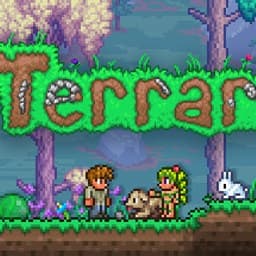
Terraria is a two-dimensional sandbox adventure game: you are dropped into a procedurally generated world with a pickaxe and an axe, and what happens next is almost entirely up to you.
It is often described as a 2D Minecraft, which undersells the combat. Progression runs through a long chain of bosses, each gating better materials and equipment, and beating one meaningfully changes the world — new enemies appear, new biomes become reachable, new crafting tiers open. The game has a direction even though it never tells you what it is.
Building is the other half. Blocks, furniture, lighting and paint support everything from a functional base to elaborate constructions, and NPCs move in when you provide suitable housing, each selling goods and some requiring particular biomes or conditions to appear.
The content total is unusual for the price: thousands of craftable items, dozens of enemy types per biome, multiple hardmode tiers after the first major boss, and an event system that periodically throws invasions at your base.
Paid once on Windows, macOS and Linux, with no additional purchases — every update since 2011 has been free. Supports multiplayer on shared servers, and has a large and long-established modding scene.
Re-Logic has developed and published Terraria since 2011, releasing every content update free of charge, including several described at the time as the game's final update.
